Robotics Startup Funding Jumps 185 Percent as Global Markets Pivot to Physical AI

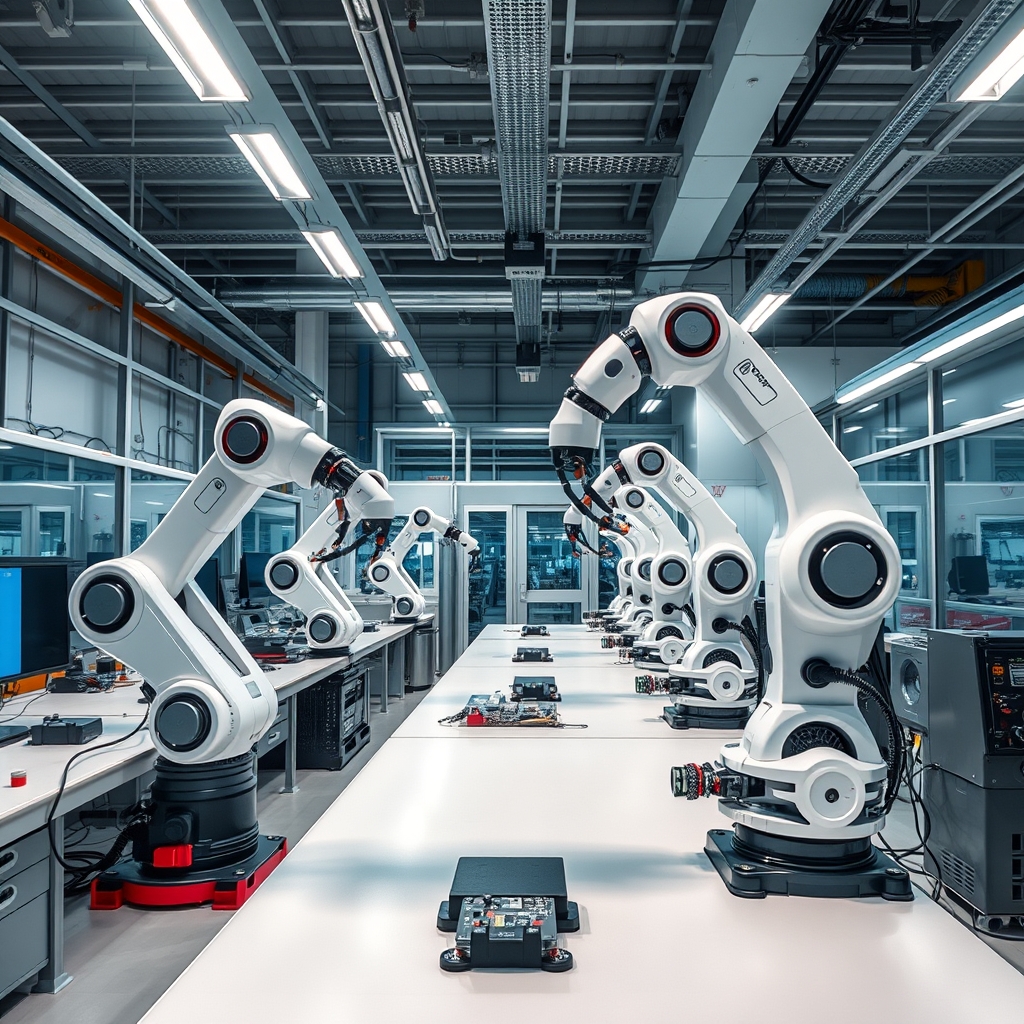
Venture capital investment into robotics startups has experienced a monumental surge throughout 2026, driven heavily by accelerated interest in physical artificial intelligence. Market tracking data reveals that global venture funding directed toward the sector reached $9.9 billion during the third quarter alone. This figure represents more than double the $4.3 billion recorded during the corresponding period in the previous year, highlighting a sustained trajectory of high-volume capital allocation.
When examining performance across the first three quarters of 2026, aggregate sector funding displays an impressive year-over-year increase of approximately 185 percent. This upward momentum underscores a broader shift among institutional investors eager to back technologies that bridge digital software models with physical machinery and automation infrastructure.
Global Distribution and Major Capital Inflows
Geographically, the vast majority of robotics venture capital during this cycle has concentrated in two primary regions. China leads global fundraising totals with $13.2 billion secured, closely followed by the United States with $12.1 billion. Meanwhile, Germany establishes itself as the third-largest recipient market, though it trails significantly behind the frontrunners with $1.7 billion in total investments.
Prominent transactions highlight the scale of ambition driving these regional ecosystems:
- Guangzhou-based Xpeng Robotics secured $900 million to advance its physical robots and underlying artificial intelligence models.
- Shenzhen-based AI2 Robotics closed a $736 million Series C financing round to support intelligent systems deployed across manufacturing, healthcare, and service industries.
- Pittsburgh-based Skild AI captured a $1.4 billion round centered on the ongoing development of its foundational robotics model, Skild Brain.
- Germany-based Neura Robotics collected $1.4 billion to fund cognitive automation equipment paired with advanced data infrastructure.
Overcoming Data and Infrastructure Hurdles
Despite robust capital availability, expanding automation into the physical realm presents distinct technical hurdles compared to traditional software development. Industry leaders emphasize that the primary obstacle involves data acquisition and curation. Unlike large language models that draw from vast repositories of existing internet text, physical artificial intelligence requires proprietary multimodal data sets incorporating vision, tactile feedback, force, and torque measurements.
Transforming raw sensor inputs into actionable mechanical tokens demands extensive computational power and sophisticated storage architectures. Industry participants note that managing these complex information pipelines represents a capital-intensive procedure as startups transition from early pre-training environments toward advanced post-training phases.
Emerging Unicorns and Market Outlook
The influx of venture capital has rapidly expanded the population of high-valued private enterprises. Approximately 75 robotics companies currently hold unicorn status after securing funding over the past three years. Notably, more than half of these organizations achieved this designation during 2026 alone, signaling intense competition across heavy industry, logistics, manufacturing, and consumer household applications.
While capital availability remains high and innovative use cases multiply, the long-term positioning of individual participants remains fluid. As enterprises navigate the complexities of real-world deployment, the sector continues to evolve rapidly in response to shifting technological demands and competitive pressures.