Matt Calkins Outlines Enterprise Control Plane Strategy for Artificial Intelligence Adoption

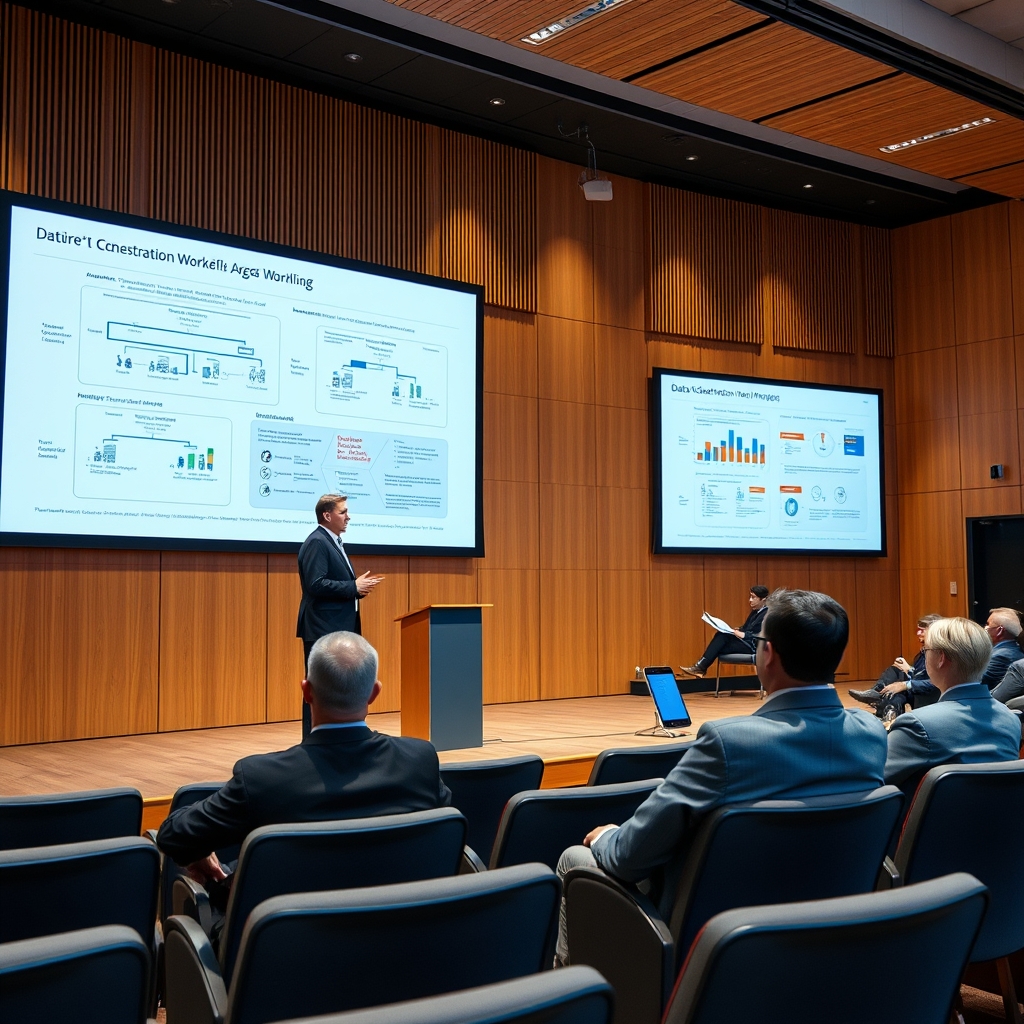
Enterprise software provider Appian has introduced a new beta control plane offering aimed at addressing the adoption challenges surrounding generative artificial intelligence in large organizations. Speaking at the Appian Europe conference, Chief Executive Officer Matt Calkins addressed what he described as the weird paradox of the artificial intelligence revolution, noting that despite massive financial investments over the past four years, productivity gains in major corporate environments have largely underperformed initial market expectations.
The Enterprise Adoption Challenge
According to Calkins, high-stakes organizations such as banks, healthcare institutions, and government agencies operate with minimal tolerance for error and rely heavily on standardized, highly controlled operational procedures. Because early artificial intelligence tools operate on probabilistic models rather than deterministic software logic, risk-averse institutions have been hesitant to integrate unpredictable technologies into core workflows. Traditional enterprises require stringent governance, compliance tracking, and operational predictability before deploying new technical capabilities at scale.
Core Capabilities of the Control Plane
To bridge the gap between autonomous artificial intelligence agents and corporate operational frameworks, Appian has consolidated several key platform features into a unified control architecture. The newly announced control plane is designed to provide organizations with specific operational capabilities:
- Deterministic process orchestration to bound artificial intelligence agent behaviors within established operational workflows.
- A distributed data fabric intended to ground model outputs in verified enterprise information assets.
- Comprehensive governance infrastructure allowing managers to monitor, constrain, and audit agent executions.
- Flexible execution routing that lets businesses choose between frontier models, smaller language models, traditional robotic process automation bots, or human intervention.
Calkins emphasized that managing agentic workflows requires a structured division of authority where autonomous agents interact through deterministic layers rather than directly commanding other agents. This structural approach ensures that enterprise operations retain their underlying predictability while incorporating machine learning efficiency.
Strategic Implications for Business Operations
The introduction of a centralized control framework reflects a broader shift toward integrating emerging technologies into existing corporate operating models. Rather than requiring enterprises to overhaul established business practices, the platform aims to provide an incremental on-ramp for artificial intelligence adoption. Industry observers note that while centralized orchestration helps mitigate operational risks, organizations will need to balance top-down governance with the evolving capabilities of autonomous agents as deployment strategies mature over time.