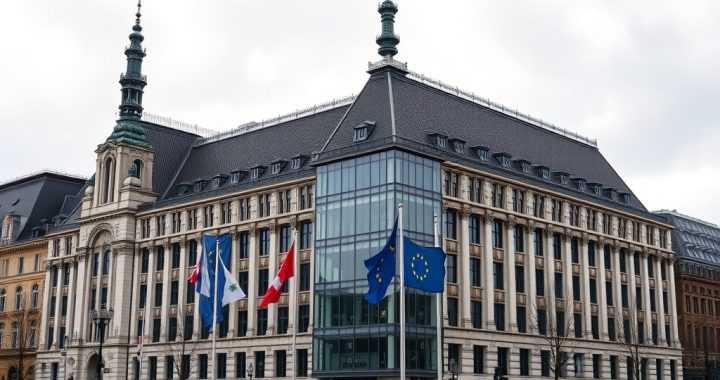
COP31 Climate Negotiations Collapse After European Union and United Kingdom Walk Out Over Fossil Fuel Omissions


The annual United Nations climate conference, COP31, concluded without a final agreement for the first time since 2009. Following a contentious series of negotiating sessions in Antalya, Turkey, that extended past the official deadline into the early hours of Sunday morning, key government delegations chose to walk away rather than ratify a pact they deemed insufficient to address the accelerating trajectory of global temperature increases.
Delegations from both the European Union and the United Kingdom rejected the final draft because it omitted explicit language addressing the necessary transition away from fossil fuels. The breakdown in consensus highlights growing tensions between international climate commitments and the practical compromises embedded in multilateral negotiating texts, particularly during a year when global temperatures have closely approached the 1.5 degree Celsius threshold above pre-industrial averages.
Disagreements Over Fossil Fuels and Carbon Capture
The core dispute centered on the removal of explicit references to fossil fuel phase-outs from the conference text, echoing similar omissions at previous summits. While the landmark COP28 conference in Dubai established a clear call for a global transition away from fossil fuels, subsequent meetings have struggled to maintain that level of ambition.
In addition to the lack of fossil fuel commitments, European negotiators raised strong objections to the draft’s heavy reliance on carbon capture, utilization, and storage technologies as a primary mitigation strategy. Wopke Hoekstra, the European Union Commissioner for Climate, Net Zero and Clean Growth, stated that the bloc assessed it was better to draw a line in the sand rather than muddle through with an agreement that represented a step backward for scientific integrity.
Hoekstra noted that the final text failed to recognize the direct link between the combustion of fossil fuels and planetary warming. Despite a last-minute revised draft presented on Sunday morning that scaled back the emphasis on carbon capture and acknowledged recent scientific reports regarding temperature overshoot, the continued absence of fossil fuel phase-out language prompted the European Union to walk out of the proceedings.
Financing Baselines and Developing Nation Support
Negotiations were further strained by disagreements over financial commitments intended to support climate adaptation in developing nations. Building on pledges made at prior conferences to scale up financial flows, the proposed COP31 agreement ultimately failed to establish a concrete baseline or definitive targets to back up those commitments.
Earlier drafts had referenced a specific goal to reach at least 120 billion dollars in annual adaptation finance by the year 2035, but those figures were removed from subsequent versions of the text. Miatta Fahnbulleh, the United Kingdom Secretary of State for Energy Security and Net Zero, described the failure to reach a comprehensive and ambitious accord as immensely disappointing.
The United Kingdom government released a formal statement indicating that the proposed cover decision failed to meet the moment and compromised where bold collective action was required. With the scientific consensus indicating that limiting global warming to 1.5 degrees Celsius is increasingly out of reach without aggressive net-negative greenhouse gas strategies, the collapse of COP31 underscores deep divisions over how the international community will navigate the coming decades of climate policy.