Walgreens Adds Allentown Micro-Fulfillment Site With Capacity for 28 Million Prescriptions

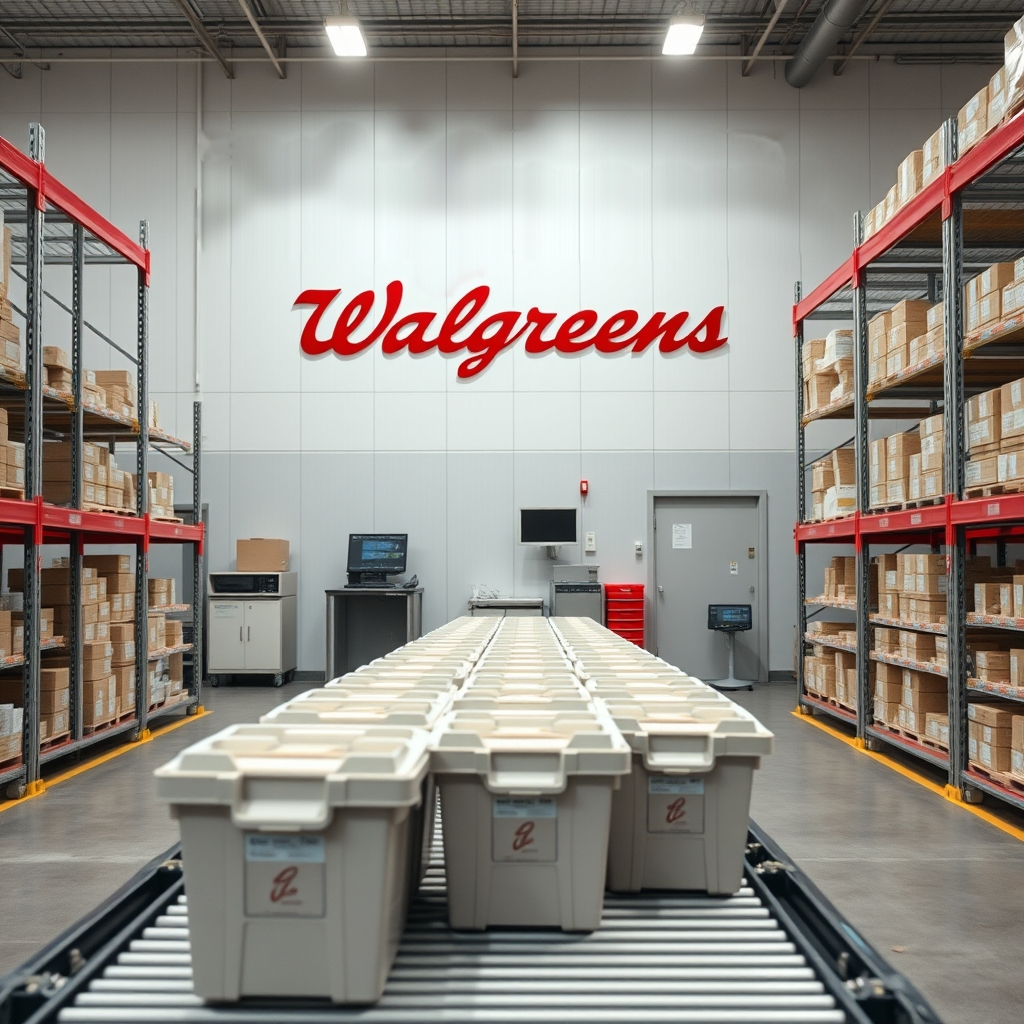
Walgreens is extending its micro-fulfillment network with a 68,000-square-foot facility in Allentown, Pennsylvania, designed to process more than 28 million prescriptions a year. The site is expected to serve nearly 650 Walgreens stores, giving the pharmacy chain a substantial centralized capacity to support prescription operations across a broad store network. The development puts warehouse and fulfillment infrastructure at the center of a business that still relies on local pharmacies to serve customers, while assigning a large volume of prescription processing to a dedicated facility.
The figures describe the facility’s potential annual processing capacity and intended store reach; they do not establish how much volume it is currently handling or how that work will be divided among locations. Walgreens has not provided details in the available announcement about the site’s investment, staffing, opening timetable, specific equipment or expected cost savings. Those distinctions matter to retailers and investors assessing what the expansion means: a large stated capacity signals operational scale, but performance depends on how effectively that capacity is integrated with store demand and pharmacy workflows.
Centralized capacity, local service
Micro-fulfillment is a model in which some recurring or high-volume order processing is handled at a specialized facility rather than entirely within individual retail locations. In pharmacy, centralized processing can give a chain a way to organize work across multiple stores, while local pharmacies remain the customer-facing point for services such as prescription pickup and consultation. The approach is not a replacement for every store-level pharmacy task. Prescription operations involve accuracy checks, coordination and customer-specific needs, so the division of work between a central site and local teams is a key part of how the model functions.
For Walgreens, the Allentown site’s planned reach—nearly 650 stores—makes coordination a central operational question. The facility must fit into a network in which prescriptions are tied to local customers, individual store operations and the timing of demand. The announcement does not specify the routing process or which prescriptions will be handled there. Still, a centralized site serving hundreds of pharmacies illustrates how large retailers can use dedicated infrastructure to support work that would otherwise be distributed across many locations, while keeping the neighborhood pharmacy as the familiar service point.
What the scale means for operations
A stated capacity of more than 28 million prescriptions annually provides a measure of the site’s intended scale, but capacity alone does not show utilization, productivity or financial return. Those outcomes depend on factors such as the volume directed to the facility, the reliability of the process and the ability to coordinate work with store-level operations. Walgreens has not disclosed those performance measures in the supplied information. For business and finance teams, the distinction is important: facility size and theoretical throughput describe infrastructure, while evidence of operational impact requires information about actual processing volumes, service levels and costs.
The same distinction applies to technology. Micro-fulfillment facilities commonly bring work into a purpose-built setting, where processes and equipment can be organized for repeatable handling. But the announcement does not identify the technology installed in Allentown, so it would be premature to attribute particular automation systems or software capabilities to the site. For technology and operations leaders, the development instead highlights the questions that accompany a large-scale fulfillment buildout: how the facility connects with pharmacy systems, how exceptions are managed and how accurate, timely work is maintained as orders move between central processing and local stores.
Execution will determine the value
For customers, the relevance of the site is likely to be felt through the performance of the wider prescription network rather than through a direct interaction with the facility. A centralized model can support pharmacy operations, but the customer experience still depends on dependable fulfillment and communication at the store. The available details do not promise faster service or describe a change to how customers place or collect prescriptions. Any assessment of customer impact will therefore need to distinguish the facility’s capacity and store coverage from measurable changes in access, wait times or service quality.
The Allentown facility is a significant addition to Walgreens’ micro-fulfillment strategy by footprint, stated processing capacity and number of stores served. Whether that infrastructure delivers practical and financial benefits will depend on implementation and ongoing coordination across the network, details not established by the announcement. For now, the clearest measure is the scale of the operation Walgreens is building: a 68,000-square-foot site designed to process more than 28 million prescriptions a year for nearly 650 stores. Future information about utilization, service outcomes and costs would provide a fuller picture of how the model is performing.