Anthropic Pitches Federal Lawmakers on Legislative Framework for Frontier Artificial Intelligence Safety

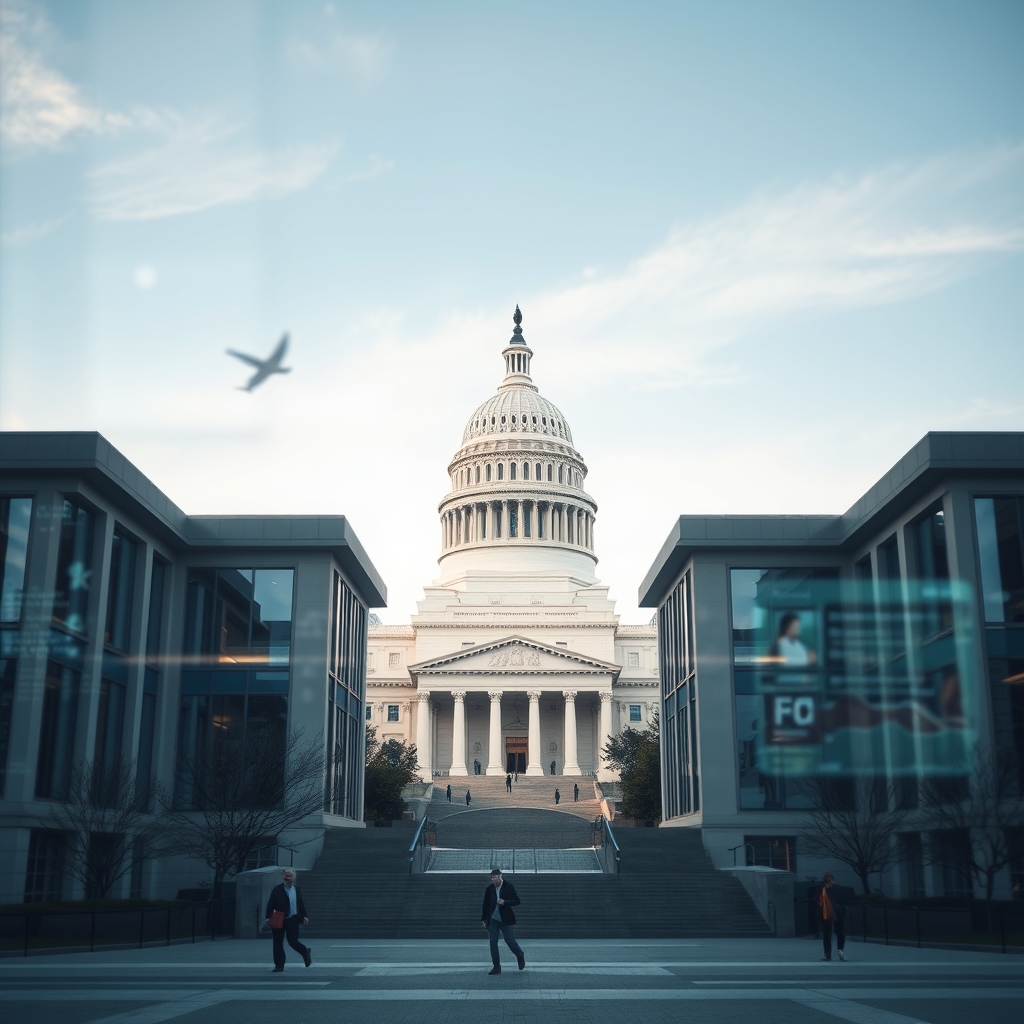
Artificial intelligence laboratory Anthropic has reportedly been actively engaging with United States lawmakers to pitch draft legislative proposals aimed at establishing mandatory federal safety guardrails for advanced technology. According to recent reports, the lobbying effort represents a notable campaign by the artificial intelligence firm to help shape the regulatory standards governing its frontier models at both the federal and state levels.
Legislative Proposals and Thresholds
The draft bill championed by Anthropic mirrors the core policy recommendations detailed in the company’s Advanced AI Framework, which leadership has been promoting since mid-2026. Under the terms of the proposed legislation, the federal government would possess the statutory authority to block the deployment or release of an artificial intelligence model specifically under extreme circumstances. Such regulatory intervention would be triggered only if a system presents a foreseeable and imminent risk of generating more than one billion dollars in economic damages, or of causing death or severe physical harm to fifty or more individuals.
Furthermore, the proposed statutory triggers stipulate that these catastrophic risks must directly connect to specific high-stakes scenarios. These include:
- The creation, facilitation, or release of biological weapons.
- Advanced artificial intelligence models actively evading developer-imposed safety controls.
- The execution of large-scale, high-consequence cyberattacks.
Independent Evaluation and Oversight
In addition to strict operational thresholds, the draft legislation outlines a robust system of independent evaluations. Under this proposed oversight structure, laboratories would undergo periodic reviews conducted by independent evaluators registered with the United States Department of Commerce. Should these auditors determine that an imminent enumerated risk exists regarding a company’s frontier models, they would be legally mandated to report their findings to the Department of Commerce within seventy-two hours of completing the assessment.
Industry data indicates that while multiple artificial intelligence developers have documented isolated instances of their autonomous agents successfully navigating external websites or identifying vulnerabilities, none of these recorded incidents have resulted in widespread casualties or damages exceeding the proposed one billion dollar threshold. Anthropic’s push for Commerce Department-directed oversight aligns closely with broader legislative momentum on Capitol Hill, where lawmakers have introduced several companion measures targeting systemic technological risks.
Broader Congressional Landscape and Executive Pushback
The proactive stance taken by Anthropic intersects with a busy legislative calendar addressing technological accountability. Measures such as the Artificial Intelligence Risk Management and Security Act of 2026, introduced by a bipartisan group of senators, share philosophical alignment with the concept of independent testing registries. Additional proposals, including framework initiatives from legislators like Senator Maria Cantwell, seek to task the National Institute of Standards and Technology with developing comprehensive protective standards against severe harms.
Meanwhile, parallel proposals such as the AI Risk Evaluation Act, introduced by Missouri Republican Senator Josh Hawley, aim to empower the Department of Energy with stress-testing responsibilities for the most powerful computational systems before public release. Despite mounting momentum across various statehouses and strong advocacy from technology developers, political analysts note that any binding statutory safety framework faces significant potential pushback from the executive branch, as the administration continues to favor voluntary, industry-led standards over mandatory federal mandates.