Chick-fil-A Stays Firm on Family Ownership and Human Hospitality Amid Global Growth
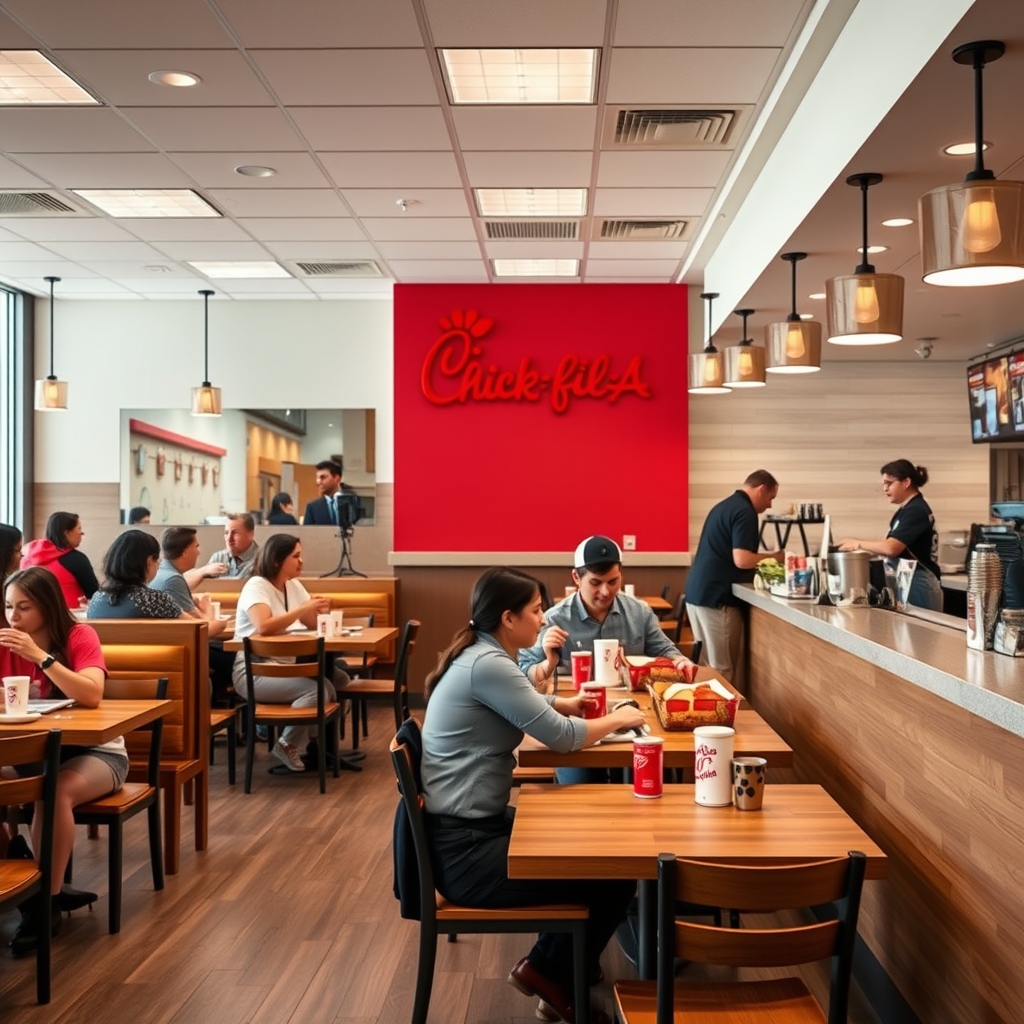
Fast-food giant Chick-fil-A is maintaining its commitment to remaining a family-owned business, even as the enterprise accelerates its footprint across the United States and international markets. Chief Executive Officer Andrew Cathy emphasized that the company intends to stick to its private status, avoiding initial public offerings and outside equity investments in favor of long-term operational planning.
Nearly five years after succeeding his father, Dan, at the helm of the chicken chain founded by his grandfather, S. Truett Cathy, the current CEO oversees a vastly expanded brand. While the broader restaurant sector has faced sluggish consumer traffic and disappointing financial results for competitors like McDonald's, Popeyes, and KFC, Chick-fil-A has continued to post solid figures. Franchise disclosures cited by market observers indicate that the company's revenue rose 14% to $10.3 billion, while net income ticked up to $1.05 billion. System sales across its roughly 3,000 locations reached $23.92 billion last year, solidifying its position as the third-largest U.S. restaurant chain by sales behind McDonald's and Starbucks.
Despite opening nearly 180 new restaurants last year and entering overseas markets such as Canada, Singapore, and the United Kingdom, leadership insists that conservative, calculated growth remains the primary objective. Staying private affords the organization a distinct advantage over publicly traded peers, whose stocks have frequently encountered volatility. According to executive leadership, private ownership allows the firm to plan in quarter-century increments rather than focusing strictly on quarterly earnings reports.
Balancing tradition with modern scale has required navigating new concepts alongside legacy principles. While foundational tenets like remaining closed on Sundays will not change, the company continues to evolve its operational strategies. Through its venture arm, Red Wagon Ventures, the business has experimented with alternate formats, including the beverage-centric Daybright concept and the home repair service Acrew Home Professionals. Red Wagon Ventures also plans to explore potential acquisitions of other family-owned businesses that lack succession plans.
At the restaurant level, the chain is approaching emerging technologies with caution. While exploring behind-the-scenes automation and digital possibilities, leadership has explicitly rejected adopting AI voice ordering in drive-thru lanes. Executives stress that maintaining human-to-human interaction is critical to preserving the signature hospitality that has kept the brand at the forefront of customer satisfaction surveys for more than a decade. As industry rivals introduce new training programs and menu modifications to recapture customer loyalty, Chick-fil-A remains focused on disciplined menu expansion and fundamental service excellence.
Source: CNBC Business