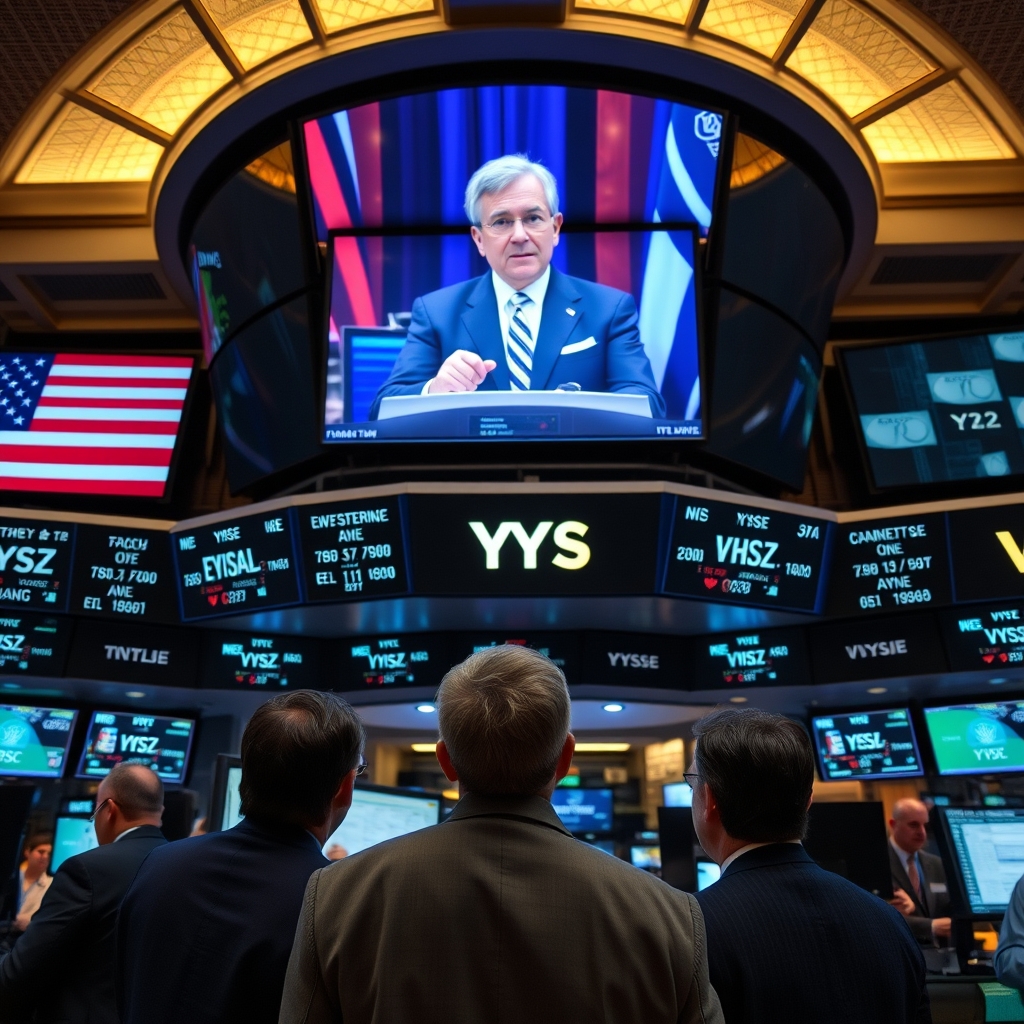
American equities experienced a notable downturn on Wednesday afternoon, driving major market indexes toward their lowest closing levels since July. According to reporting by BusinessNewsWired correspondent Eva Roytburg, the market sell-off was triggered by Federal Reserve Chair Kevin Warsh following the central bank’s announcement of its first interest rate hike in three years.
Market Indices React to Monetary Policy Shift
The S&P 500 dropped by 1%, positioning the index on a trajectory toward its lowest close since the summer months. Meanwhile, the Dow Jones Industrial Average suffered a sharper decline, falling 1.7%—a drop of more than 700 points—with the financial sector leading the downward trend. The Nasdaq Composite also retreated, posting a 0.8% loss.
Fixed-income and currency markets responded swiftly to the central bank’s updated stance. The 10-year Treasury yield hovered near 5%, maintaining positions close to its highest level since 2007. At the same time, the dollar index climbed 0.6%, reaching its strongest valuation since late July.
The Turning Point During the Press Conference
Initial reactions on the trading floor of the New York Stock Exchange were relatively calm. The benchmark quarter-point rate increase had largely been anticipated by investors, and all three major indexes traded higher leading up to the 2:00 p.m. policy announcement. However, market sentiment shifted abruptly once Chair Warsh began his post-meeting press conference.
Analyst commentary highlighted the delicate communication challenge facing the central bank leader. Investors sought clarity on whether the move represented an isolated monetary adjustment or the initiation of an aggressive tightening cycle. Rather than adopting a definitive forward-looking posture, Warsh delivered remarks interpreted as decidedly hawkish.
"I would be hard pressed to describe broad financial conditions as restrictive," Warsh stated during his opening remarks. He noted that this perspective was broadly shared among committee members, leading the central bank to remove a dose of policy accommodation.
This terminology marked a departure from previous communication styles under the prior administration of Jerome Powell, where monetary policy was routinely described as modestly restrictive—implying that benchmark borrowing costs of 3.5% to 3.75% were already sufficient to temper economic growth. Warsh’s commentary suggested policymakers do not currently view prevailing rates as restrictive, raising the implication that additional hikes may be necessary.
Diverging Forecasts Among Economists
When questioned by reporters, Warsh declined to specify whether current monetary policy has reached restrictive territory. He also distanced himself from official central bank projections indicating one additional rate hike this year followed by a prolonged pause through 2027, clarifying that those forecasts belonged to his colleagues rather than his personal outlook.
Market participants weighed competing perspectives on the trajectory of future monetary decisions. Jeffrey Roach, chief economist at LPL Financial, suggested in a published note that sustained economic momentum could mean interest rate cuts are deferred until 2028, with the potential for intermediate rate increases. Chris Zaccarelli, chief investment officer at Northlight Asset Management, emphasized historical precedent showing that central bank tightening cycles rarely stop at a single adjustment.
Conversely, alternative viewpoints suggest that markets may be overestimating the central bank’s aggressive intentions. Michael Pearce, chief U.S. economist at Oxford Economics, projected that the central bank will likely implement one final rate hike before halting the cycle entirely, noting that market pricing may currently incorporate excessive tightening expectations for the coming year.
Source: Fortune
