Make Outlines Glass-Box Vision for Enterprise AI at Waves 2026

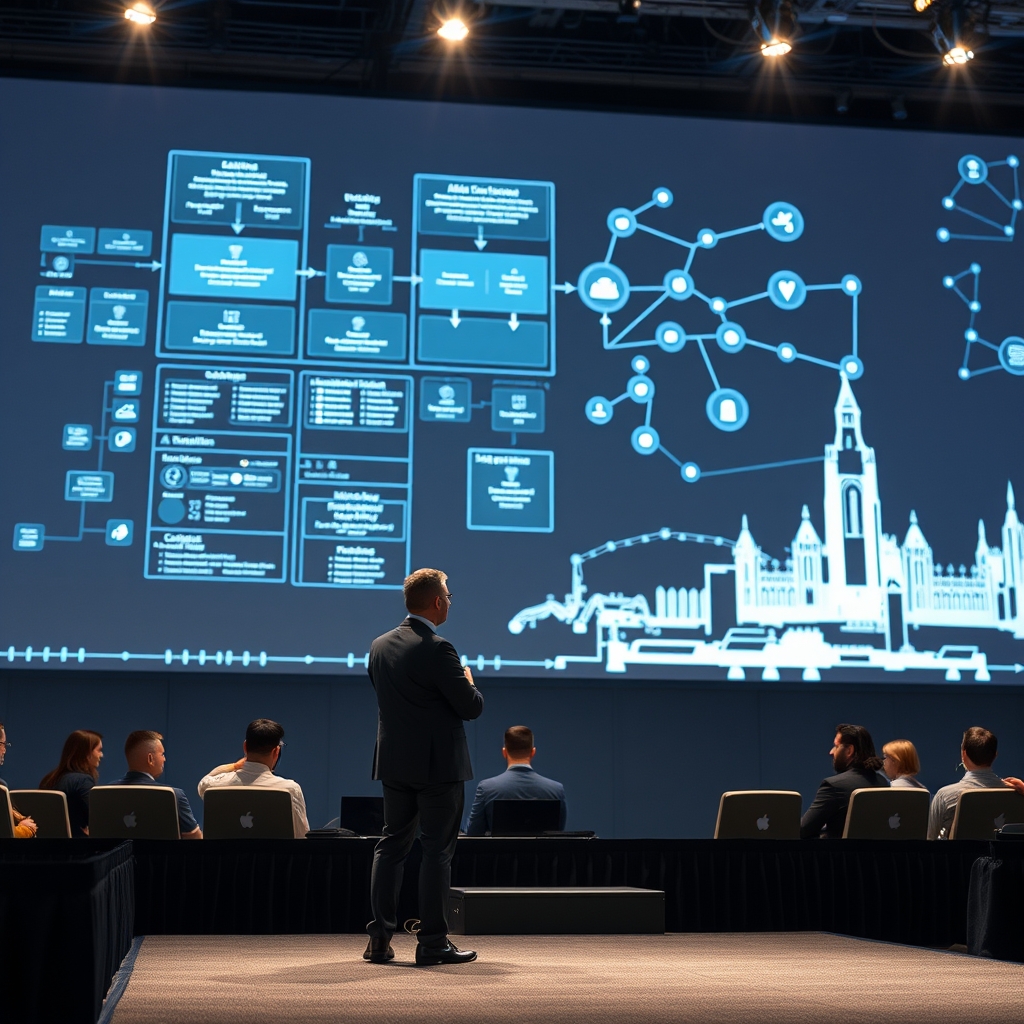
Automation vendor Make used its Waves 2026 conference in Prague to outline an ambitious strategy aimed at helping enterprises transition from basic individual AI adoption to deep operational transformation. Chief Executive Officer Fabian Veit told attendees that while personal AI tools have achieved widespread usage, businesses have struggled to fundamentally alter their underlying workflows and operating models. According to Veit, the primary barrier to broader organizational integration is not fear of malicious artificial intelligence, but a lack of operational trust and transparency.
Shifting from Black Box to Glass Box Operations
To overcome this hesitation, Make introduced a glass-box vision designed to replace opaque automated processes with transparent, governable systems. The company aims to act as the primary visual layer that allows human operators to maintain control while autonomous agents execute complex business tasks at scale. Because thousands of interacting agents and processes create immense complexity, the platform relies on meaningful abstractions and visual models to help workers interpret, guide, and approve proposed changes without needing to micromanage every technical detail.
- AI assistant Maia collaborates directly with human users to plan and design solutions.
- Support for external assistants like Claude and ChatGPT through standardized protocols.
- Visual scenario builders allow stakeholders to inspect and modify constructed workflows.
Head of Product for Governance Anastasia Horňáková addressed the operational risks of permissive environments, noting that unmonitored deployments and shared team accounts become unmanageable when autonomous agents enter the picture. To address this, Make leverages structured control frameworks where agents inherit the specific roles and permissions of their human supervisors. Private spaces isolate sensitive resources, while toolboxes restrict connections and actions. When automated decisions exceed predefined thresholds, integrated human-approval capabilities pause workflows to require explicit sign-off before proceeding.
Enterprise-Wide Visibility and Process Intelligence
Peter Trenkner, another product leader at the firm, emphasized that isolated systems do not automatically equate to a coherent enterprise operating model. To address this gap, Make is extending its landscape visualization technology, known as Grid, to incorporate agents and digital assets operating across multiple platforms. This shared landscape provides a unified environment for humans and agents alike to analyze operational relationships, track execution traces, and evaluate performance.
Additionally, the company previewed a discovery capability powered by parent company Celonis. By combining process mining and task mining methodologies, this capability scans organizational workflows to identify manual tasks and operational bottlenecks suited for agentic automation. Although combining different architectural lineages requires ongoing reconciliation, the portfolio logic integrates structural landscape visualization with concrete execution data, offering enterprises a comprehensive approach to managing autonomous business operations.