Oracle Says Funding Is in Place for OpenAI Data Center Buildout

Oracle says it has secured the financing planned for its infrastructure contract with OpenAI, a step that addresses investor questions about how the company will pay for a rapid expansion of AI data center capacity. The company said on November 20 that the funding was complete after a final capital raise earlier in the month. Its plans extend beyond the Abilene, Texas, campus to a further 4.5 gigawatts of additional US capacity, linking the financing announcement to a large construction and equipment program.
Funding plan combines equity, debt and supplier financing
The final raise totaled $20 billion, split approximately evenly between new stock and debt, according to the report. Oracle said the funding identified at its Investor Day is now available and includes vendor financing among its sources. Vendor financing allows a buyer to pay for equipment over time through arrangements with suppliers; it can help align payments with a project’s deployment, but it also forms part of the overall funding picture that investors and customers may consider.
Oracle described any further private discussions with vendors as additional options rather than necessary components of the funding already laid out. That distinction matters because the company’s announcement concerns the availability of its stated financing plan, not a disclosure of the contract’s total value or a guarantee that every future project cost is fixed. The update followed investor scrutiny of the scale of Oracle’s AI infrastructure spending and its exposure to OpenAI. Oracle shares rose as much as 3.3% in after-hours trading after the company’s statement.
Construction milestones point to a multiyear capacity buildout
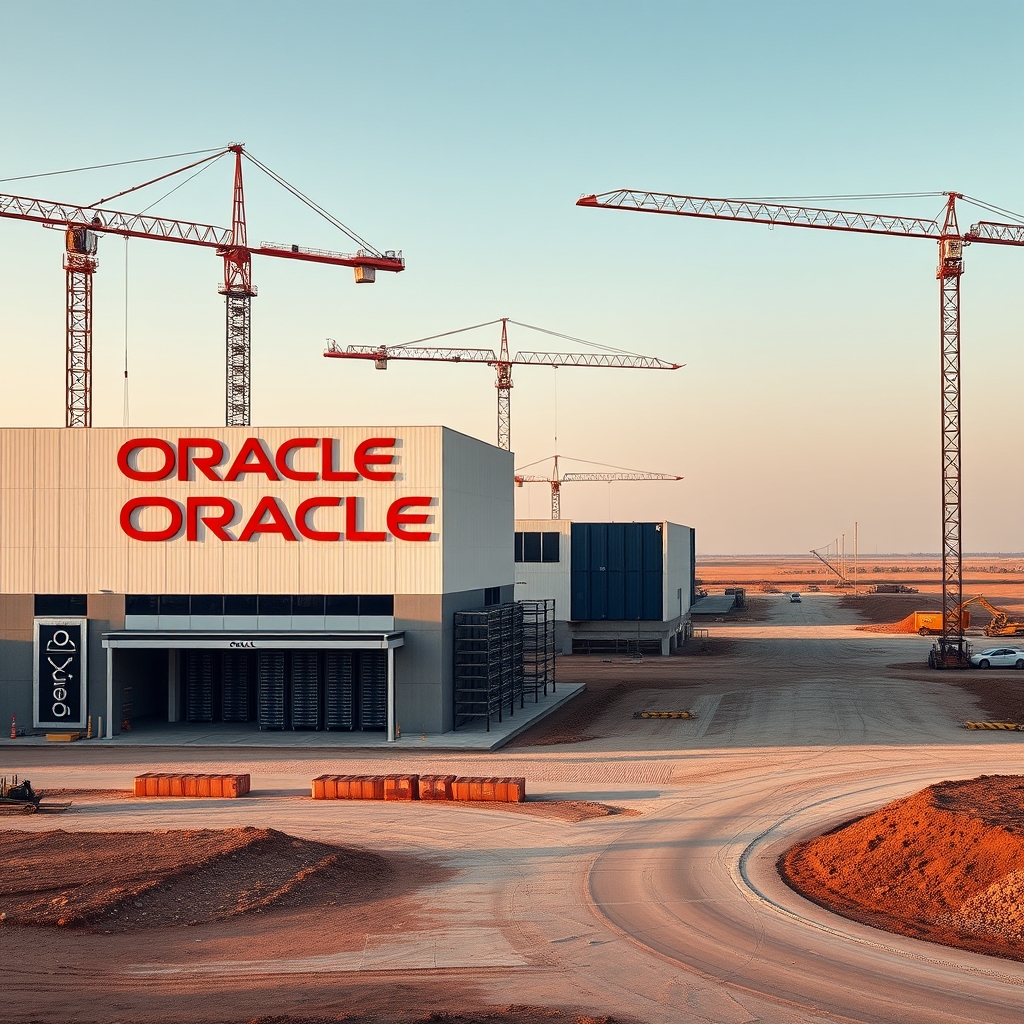
Oracle reported that construction at the Abilene campus is nearly complete. The company has said that OpenAI’s GPT-6 Astra was trained there, placing the site at the center of the partners’ current infrastructure relationship. The planned expansion includes 4.5 gigawatts of additional US data center capacity beyond Abilene, although the announcement does not provide a detailed schedule for bringing all of that capacity online.
For the next gigawatt-scale campus, Oracle said it has obtained all required permits for a site in Shackelford County, Texas. Permits represent a key step toward construction, but they are not the same as a completed facility or operational computing capacity. Oracle also expects Nvidia Vera Rubin racks to be handed over in the coming weeks. The racks are cabinets containing servers and networking equipment; Techzine reported that the systems are intended to provide OpenAI with additional capacity for future AI workloads.
These milestones help distinguish the company’s financing claim from delivery progress. Data center capacity depends not only on capital, but also on site preparation, construction, equipment and the work required to bring systems into service. Oracle’s update offers evidence of movement on funding, permitting and hardware, while leaving future completion and deployment steps ahead. For enterprise technology and finance teams, that distinction is important when evaluating a supplier’s stated plans against the infrastructure that is actually available.
Partnership also reaches Oracle’s application portfolio
The relationship is not limited to data center capacity. At Oracle AI World on October 27, Oracle announced plans for Oracle AI Workspace as part of an expanded partnership with OpenAI. The planned workspace is designed to let employees use ChatGPT plugins to access Oracle Fusion Applications, NetSuite and Oracle AI Database. The announcement describes an intended connection between conversational AI tools and Oracle products, rather than a confirmation that the workspace is already generally available.
This combination of infrastructure commitments and application plans gives the partnership relevance for customers assessing Oracle’s broader AI offering. Organizations considering AI features in business software also have reason to examine the technology and suppliers supporting those features. In Oracle’s case, the same relationship covers data center investment for OpenAI workloads and a planned route for ChatGPT plugins into enterprise applications. The arrangement brings infrastructure execution and software integration into a shared vendor relationship.
Oracle’s funding update therefore addresses one risk question without resolving every operational one. Customers and investors will continue to distinguish committed financing from finished facilities, and permitted sites from live capacity. The company has cited a completed funding plan, a nearly finished Abilene campus, permits for the next Texas site and the expected handover of new hardware. Those are tangible indicators of progress, while the pace and scale of future deployment remain central to judging how the partnership develops.