Sage Emphasizes Trust and Explainability in New Financial AI Offerings


Software provider Sage recently highlighted the strategic imperative of reliable artificial intelligence during its partner events in Atlanta and Amsterdam. As corporate finance departments increasingly adopt automated tools, industry leaders argue that accuracy, security, and absolute transparency are mandatory requirements for long-term corporate adoption.
The Shift Toward Agentic Workflows
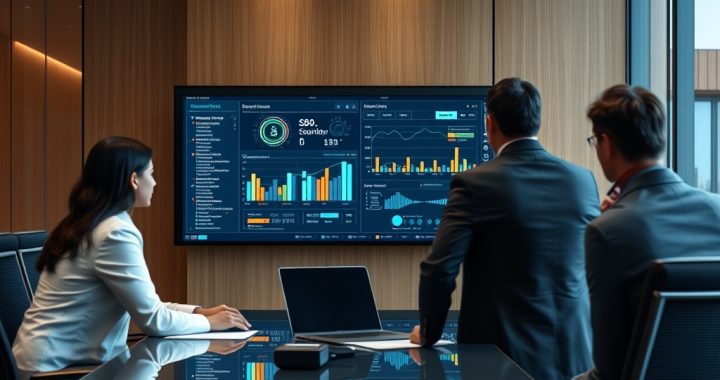
During the gatherings, executives introduced new capabilities designed to help accounting teams monitor autonomous software agents. These tools manage routine operational duties such as invoice processing, period-end closings, and financial assurance tasks. Company representatives emphasized that these systems are built to handle repetitive workloads while keeping human professionals in direct control through customizable oversight platforms and dedicated marketplaces.
- Autonomous agents handle day-to-day transaction processing and data entry.
- Human finance professionals review and authorize critical ledger activities.
- Custom controls allow businesses to set strict operational boundaries.
Addressing the Trust Gap in Corporate Accounting
Despite rapid technological advances, recent industry research indicates that finance leaders still spend significant time validating automated outputs. Many executives remain hesitant to rely completely on algorithms without clear visibility into how conclusions are calculated. To combat this hesitation, technology providers are focusing on explainable architectures, verifiable results, and auditable transaction trails.
Industry surveys show many leaders hesitate to rely on unverified automated outputs.
Explainable system frameworks help teams trace how conclusions are generated.
Predictable operational costs help organizations manage digital budgeting effectively.
The Evolution of the Corporate Finance Team
The integration of advanced digital tools is also altering the required skill sets within corporate accounting departments. Organizations are beginning to recruit professionals who combine traditional accounting expertise with data modeling and systems engineering knowledge. This shift enables finance divisions to execute deeper scenario planning, enhanced risk analysis, and more accurate predictive forecasting for the enterprise.