S&P 500 Correction Raises Risks, but History Shows a Recession Is Not a Given

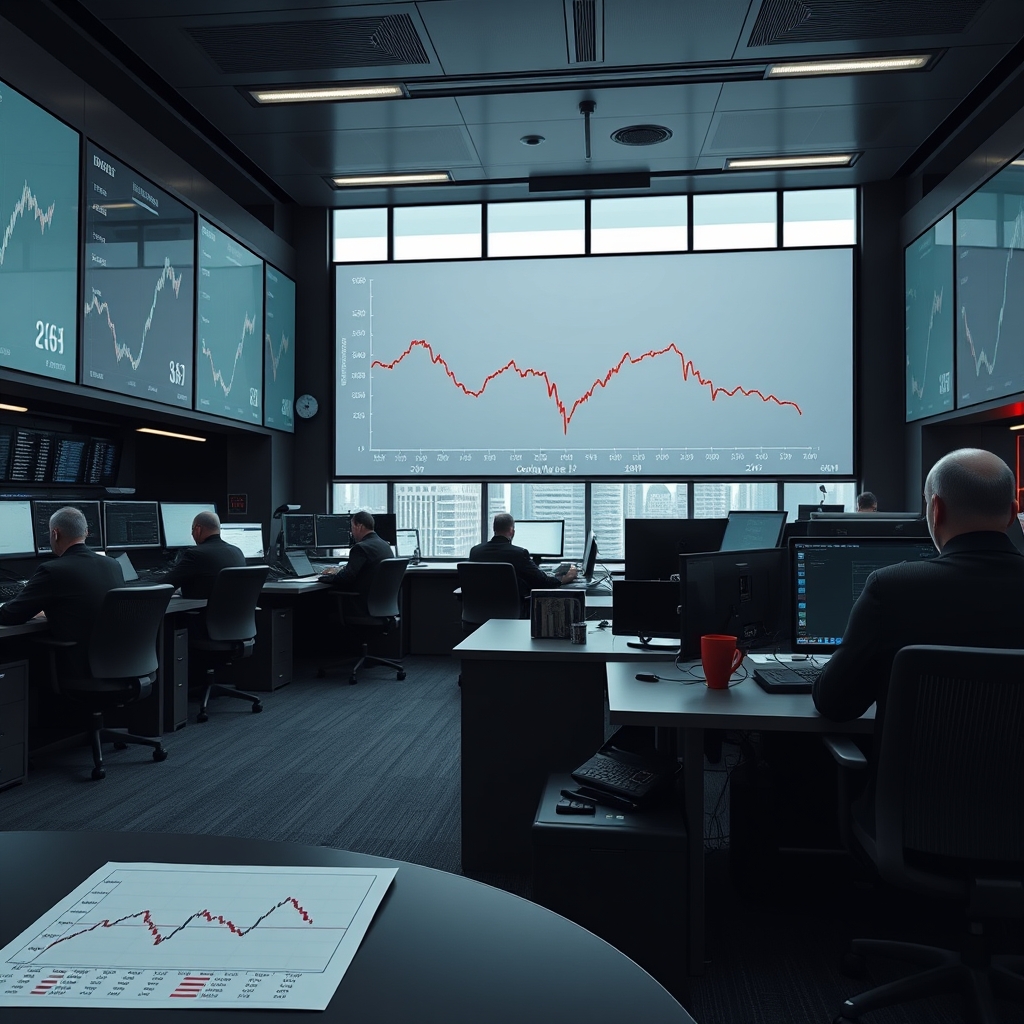
The S&P 500 has entered correction territory after a sharp retreat from its October record, renewing debate about whether falling share prices signal a wider economic downturn. The index was down 11.6% from its Oct. 6 closing high as of Nov. 20, when it fell 3.7% in a single session to 6,910.39 and recorded its seventh consecutive daily decline. The pullback is the first correction for the benchmark since April 2025.
Investors have been weighing concerns about the pace of artificial-intelligence spending, valuations among the largest technology companies and the Federal Reserve’s next moves on interest rates. Those issues can affect expectations for corporate earnings and the prices investors are willing to pay for future growth. But the market decline, by itself, does not establish that business activity is contracting or that a recession is imminent. The distinction matters to companies and investors trying to separate changing market sentiment from evidence about the underlying economy.
A correction is not the same as a bear market
A correction is commonly defined as a decline of at least 10% from a recent high. A bear market is generally marked by a fall of 20% or more from a peak, so the S&P 500’s correction could deepen, but it has not reached that threshold based on the figures reported. Neither label, however, is itself a measure of economic activity. A stock index reflects investor expectations and market pricing; a recession refers to a broad and sustained decline across the economy.
Historical experience underlines that difference. In a CNBC analysis of 13 S&P 500 bear markets dating back to 1946, eight overlapped with recessions identified by the National Bureau of Economic Research, while five occurred without one. The NBER describes a recession as a significant decline in economic activity spread across the economy and lasting more than a few months. The oil shock of 1973-74, the dot-com bust in 2000, the 2007-09 financial crisis and the 2020 pandemic downturn were among the bear markets that coincided with recessions. The 1987 and 2022 bear markets did not.
What the current signals show
Deutsche Bank macro strategist Henry Allen argues that major bear markets since the 1962 Kennedy Slide have been accompanied by at least one of three developments: a recession, deteriorating economic data that intensifies recession concerns, or a cycle of Federal Reserve rate increases. In a recent note, he said those conditions were not evident alongside the latest decline, at least so far. Allen also cautioned that the selloff differed from episodes in which investors rapidly revised their expectations for economic growth.
Allen pointed to the November U.S. flash composite Purchasing Managers’ Index as one measure of current activity. The PMI registered 54.6, above the 50 mark that separates reported expansion from contraction. That reading indicates continuing expansion in business activity, rather than a broad downturn in the data cited in the note. It does not rule out future weakness, and one survey reading cannot settle the outlook, but it provides context for why the strategist sees a different backdrop from recession-linked market shocks.
Interest-rate expectations also differ from some past downturns. Allen said the equity decline had not coincided with a hawkish repricing of Federal Reserve policy. Although market participants widely expected the central bank to raise rates again at its Dec. 9 meeting, markets were pricing fewer rate increases through September 2027 than they had on Oct. 6, when the S&P 500 reached its record. In Allen’s assessment, rate expectations had shifted slightly in a more dovish direction as stocks fell, rather than moving toward a sharper tightening cycle.
Why the distinction matters
For corporate leaders, a falling index can affect investor confidence and the market value of listed companies, but it is not a substitute for examining demand, operating performance and the cost of capital. Technology companies face particular scrutiny in this pullback because questions about AI investment and mega-cap valuations are among the concerns cited by investors. The market reaction shows uncertainty about those issues; it does not, on its own, establish that spending plans have changed or that expected returns will not be achieved.
The historical record offers perspective, not a forecast. Five of the 13 bear markets in the analysis occurred without a recession, while Allen’s framework suggests the current decline lacks several signals that have accompanied past bear markets since 1962. Both observations leave room for uncertainty: the correction could deepen, and economic conditions can change. For now, the key distinction is between a substantial repricing of stocks and a confirmed economy-wide contraction. Investors and businesses will be watching whether growth data weakens, policy expectations shift or market concerns persist as new information arrives.