Cambridge Heavy Industries Secures $6.2 Million to Advance Compact Fusion Technology

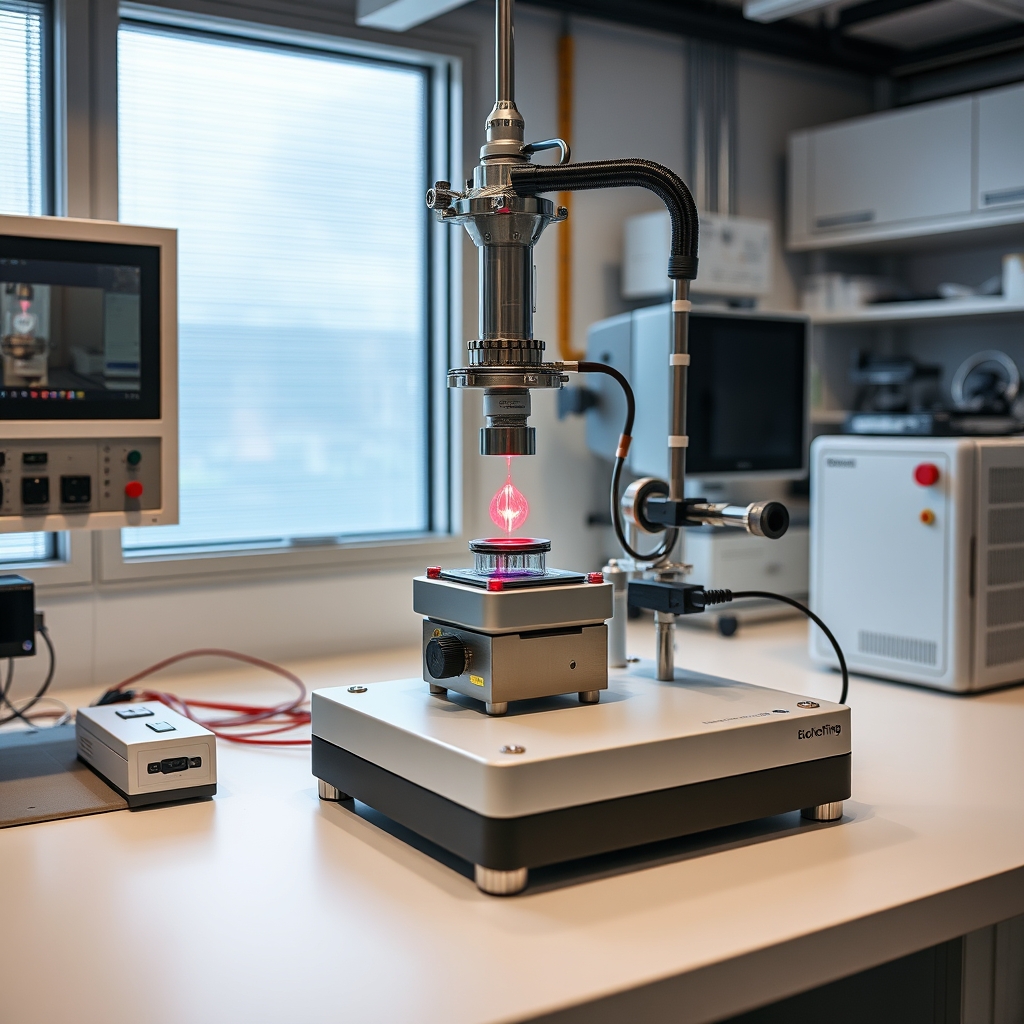
Fusion technology developer Cambridge Heavy Industries has emerged from stealth mode after securing $6.2 million in a seed funding round. The newly acquired capital will be directed toward constructing the organization’s first compact fusion reactor at its Massachusetts facility. The venture capital infusion highlights growing investor appetite for alternative energy systems designed to bypass the lengthy development schedules historically associated with traditional nuclear research.
Accelerating Development Cycles
Launched in 2025 as a spinout from the Massachusetts Institute of Technology, the enterprise was co-founded by CEO Dr. Yun Kai, Raffi Freeman, Professor Keith Nelson, and Dr. Steve Kooi. The team’s overarching objective centers on producing tritium and other rare isotopes, with a long-term vision of eventually generating commercial fusion energy. By utilizing commercially available lasers to power its modular, benchtop-scale hardware, the company aims to drastically alter traditional research paradigms.
Conventional laser-based fusion systems typically require years of research and development for every iteration. In contrast, the company’s modular approach enables weekly testing and design upgrades. According to enterprise statements, breakthroughs in shockwave science have facilitated compression efficiency levels significantly higher than legacy laser-based methodologies, while requiring only a fraction of historical capital expenditure requirements.
- Prototype footprint spans approximately the size of two dinner tables.
- Achieved pressures reaching 350 gigapascals using tens of millijoules of energy.
- Benchtop architecture allows system assembly in days using standard optical components.
Addressing Global Tritium Supply Pressures
Initial operational deployments will focus heavily on manufacturing tritium, a rare radioactive isotope of hydrogen deployed widely as fuel within experimental fusion research reactors. Global supply chains face severe shortages for the material, which currently commands a market price of approximately $33 million per kilogram. Industry leaders have frequently cited restricted tritium availability as a primary bottleneck capable of decelerating broader sector expansion.
Beyond isotope production, leadership envisions future applications for the enterprise’s neutron sources within material defect engineering and advanced neutron imaging. Procuring necessary infrastructure, including an ultrafast laser, optical components, and neutron diagnostics, forms a core priority for the newly secured capital alongside workforce expansion.
Venture Capital Backing
The seed financing round was led by Azolla Ventures. Additional participants in the syndicate included Overlay, the Mass Clean Energy Center, Neta Foundation, the Rothrock family, and P3A. Matthew Nordan, co-founder and General Partner at Azolla Ventures, noted that the ability to demonstrate the technology on a benchtop using standard components mirrors the rapid innovation cycles historically observed in modern aerospace and defense sectors.