SAP Expands Developer Portfolio at TechEd With Autonomous AI Execution and Space-Tested Models


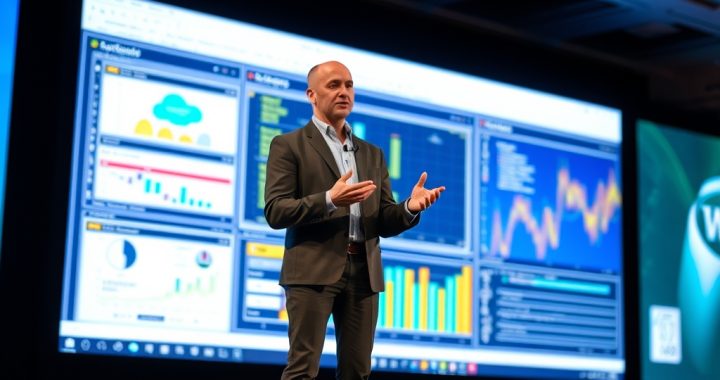
Software giant SAP SE used its annual SAP TechEd conference in Berlin to unveil a broad slate of artificial intelligence innovations aimed at shifting enterprise software from passive learning to autonomous execution. Chief Technology Officer Philipp Herzig introduced the updates, which include enhancements to the Joule Studio and Joule Work environments alongside the SAP Business AI Platform, designed to give developers advanced tools for building and governing enterprise agents.
Empowering Developers and Automating Workflows
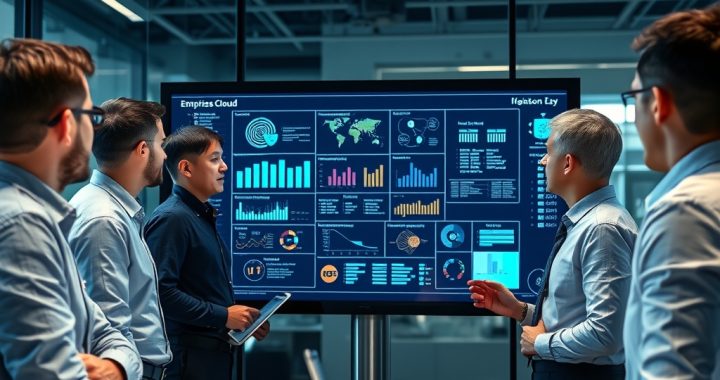
The newly expanded capabilities within Joule Studio and Joule Work allow software builders and business users to create, extend, and manage complex AI agents using both no-code and pro-code options. Supported by open protocols such as the Model Context Protocol and Agent2Agent frameworks, these tools enable autonomous assistants to reason, plan, and execute multi-step workflows across disparate systems. Furthermore, early adopter programs allow organizations to design and run specialized workflows, backed by new observability controls and administrative dashboards that track agent behavior and token usage.
Robust Governance and Trusted Data Foundations
To address security and compliance concerns, SAP introduced the SAP Enterprise AI Gateway, a centralized hub for managing traffic, enforcing policies, tracking usage, and auditing interactions across enterprise architectures. This aligns with specialized compliance features, including an AI Governance Assistant designed to help organizations meet the regulatory requirements of the EU AI Act. Underlying these agentic frameworks is the SAP Business Data Cloud, which leverages the Ontology Manager and integrations with Databricks and Reltio to ground AI outputs in verified enterprise data without exposing proprietary models to external training.
Tabular AI Validation on the International Space Station
In a demonstration of edge-computing capabilities, SAP announced that its proprietary tabular foundation model, SAP-RPT, has been deployed on the HPE Spaceborne Computer-2 aboard the International Space Station in partnership with Hewlett Packard Enterprise. Operating in orbit, the model performs anomaly triage, predicts hardware wear, and generates mission-health reports without routing data back to Earth. Back on the ground, the updated SAP-RPT-2.0 and time-series forecasting models aim to streamline predictive analytics for global supply chains and enterprise planning operations.
- Introduction of agentic thinking and multi-step planning protocols in Joule Work.
- Deployment of the SAP-RPT tabular foundation model on the International Space Station.
- Launch of the centralized SAP Enterprise AI Gateway for strict governance and compliance.